




"La Petite Chapelle"
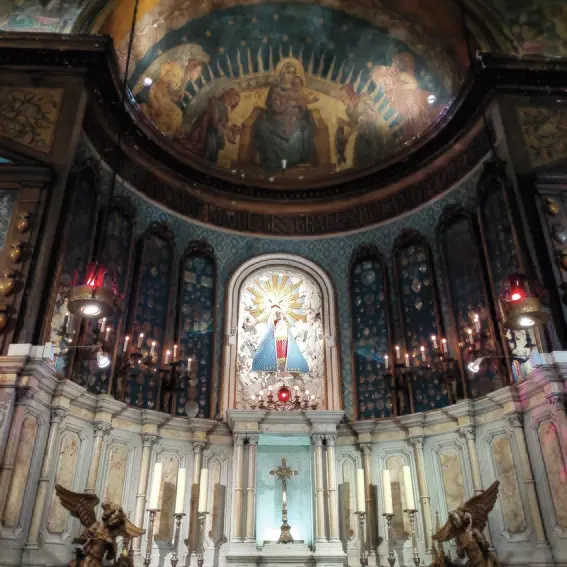
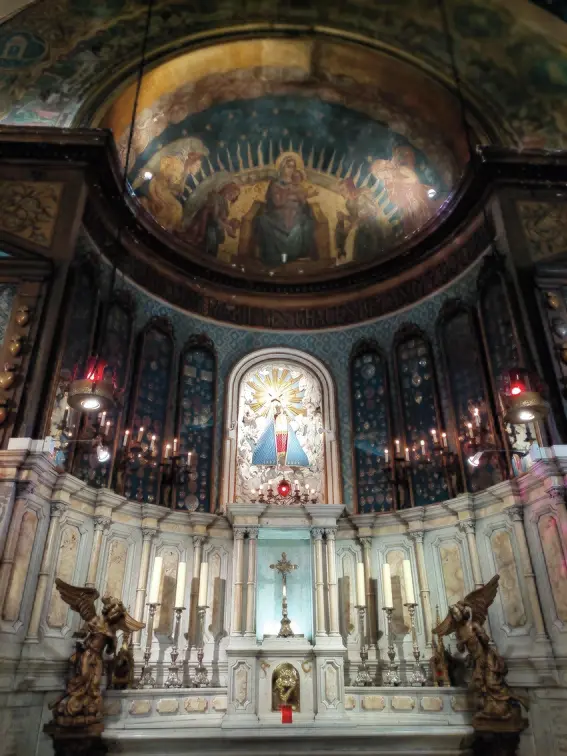
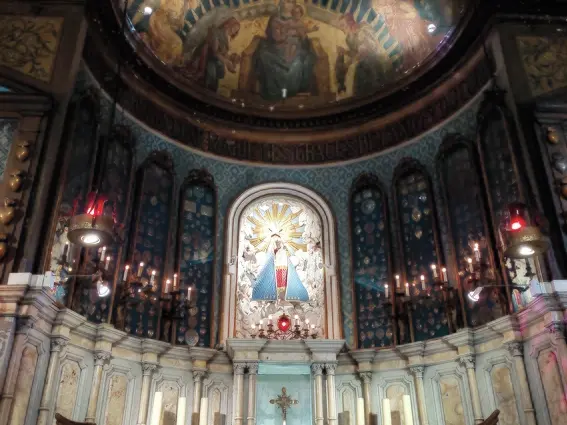
In 1403, while workers were restoring the city walls, a spring of pure water suddenly gushed forth from the sand. Nearby, they discovered a small wooden statue, 32 cm tall, depicting the Virgin Mary holding the Infant Jesus. This work may have been carved by a fisherman, using a knife, to decorate the prow of his boat, before being lost in a storm.
The statue was first named Our Lady of the Fountain, then Our Lady of the Dunes. A chapel was then built, long isolated within the Vauban ramparts. During the French Revolution, it was converted into a munitions workshop, before exploding in 1793. Left in ruins, it was finally rebuilt in 1815 thanks to a public subscription.
A place of veneration dear to the people of Dunkirk, the chapel today houses numerous votive offerings left by sailors as a token of gratitude. Its stained glass windows, made from 1953 onwards based on the drawings of Abbé Pruvost, priest and artist, retrace the history of the site.