The Carnival-Goer’s

 Survival Kit

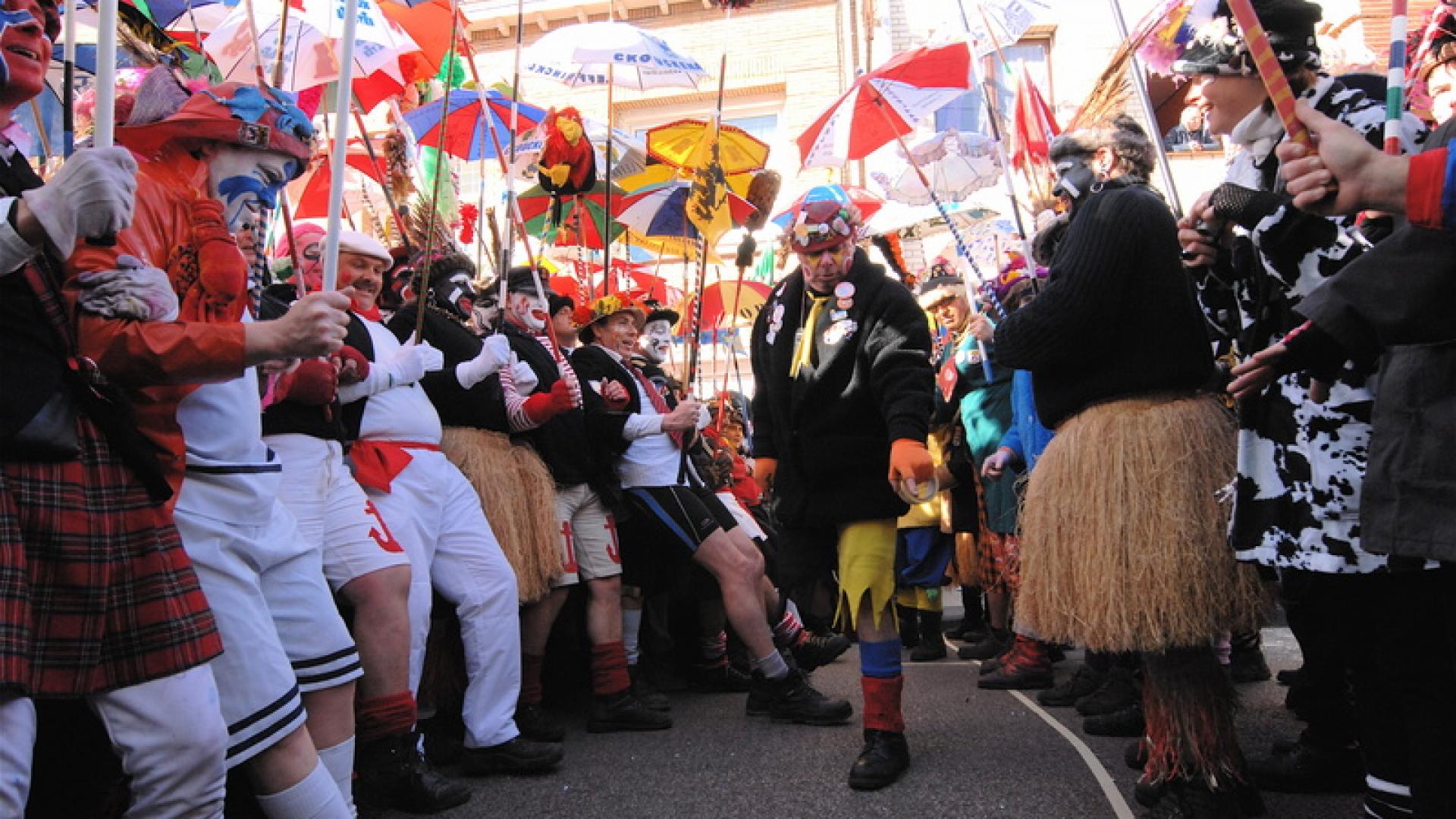
New to the carnival and eager to join in? Here are a few tips to help you experience the carnival like a fish in water… or should we say, like a herring in the air!

Carnaval De Dunkerque Premières Lignes
©

Carnaval De Dunkerque - Premières lignes

|

Ville de Dunkerque

Carnival Essentials

Survival kit

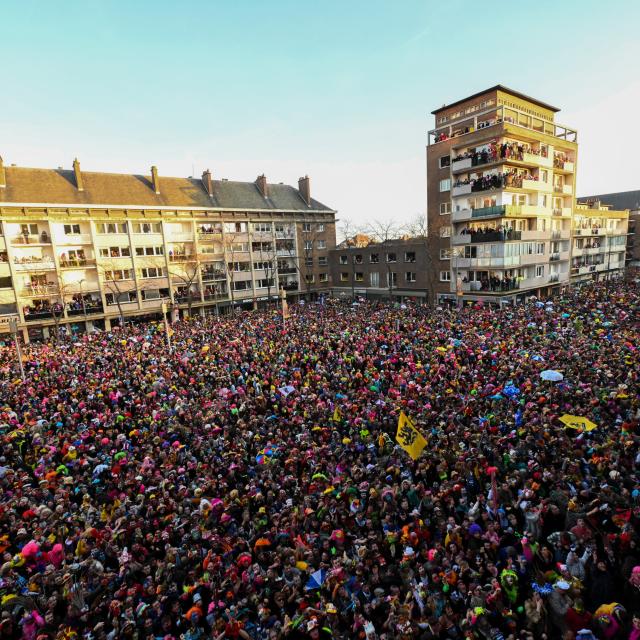
In Dunkirk, all five of your senses come alive… and you might even discover a sixth: the spirit of celebration!

To make the most of your carnival experience, do a little research before diving in, chat with the locals as you mingle with fellow carnival-goers, and above all, take a moment to read these few lines. You’ll need a survival kit if you’re not quite a seasoned carnival-goer just yet…

©

Charte Des Enfants De Jean Bart

Carnival Essentials

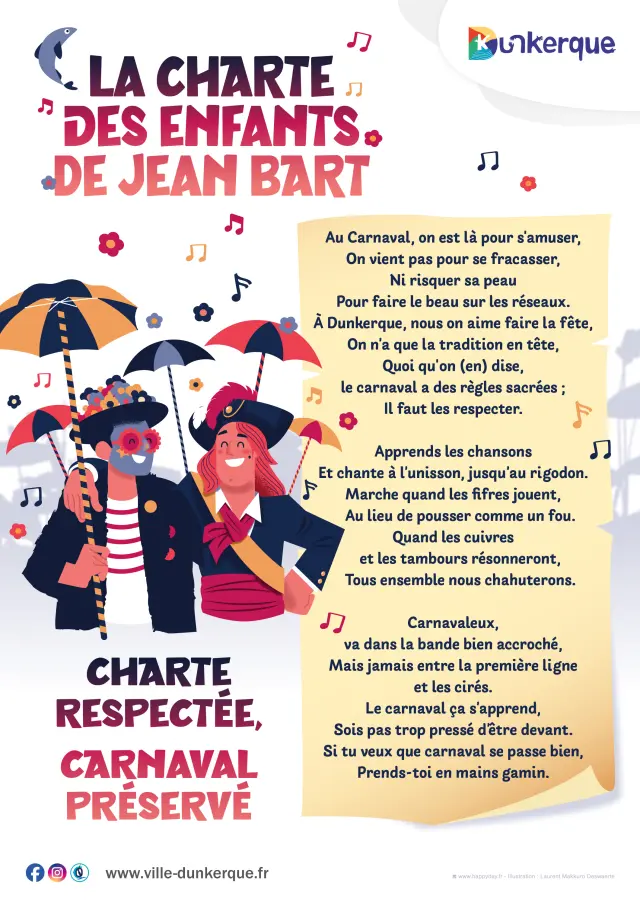
The Dunkirk Carnival is a popular celebration that brings together values and traditions. To preserve them, our Carnival has its own sacred rules. The Charter of the Children of Jean Bart is there to uphold them! It’s the key to a successful Carnival.

At Carnival, we’re here to have fun,
Not to get hurt or come undone,
Nor risk our lives
Just to look good on social media.
Here in Dunkirk, we love to celebrate,
And keep our traditions alive, whatever our fate,
Whatever people may say,
Carnival has sacred rules to obey;
They must be respected.

Learn the songs
And sing along, in unison, until the rigodon.
Keep moving when the fifes play,
Instead of pushing your way.
When the brass
And drums begin to resound,
We’ll all join in the joyful commotion.

Carnival-goer,
Stay firmly together with the band,
But never between the front line and the raincoats.
Carnival takes time to learn,
So don’t rush to the front in your turn.
If you want Carnival to go well,
Take responsibility, young fellow!

Respect the Charter, Keep the Carnival Alive!

A Carnival Like No Other…

SURPRISE NO. 1

The Carnival-goer Has a Language of Their Own

Here are a few words that will help you out in any situation…

You wouldn’t say, “Good morning, madam, it’s a pleasure to meet you today on this joyous occasion…” but rather “Qu’est-ce ça dit?” (“How’s it going?”).

You don’t say “Madam” but “Matante”, and “Mister” becomes “Mononcle” (though sometimes “Matante” is used for everyone — after all, you can never be quite sure who’s hiding behind a costume!).

L’Oncle Cô, meanwhile, has become a generic name for the Icelandic cod fisherman of old.

The “Dunkirk dialect” largely derives from words of Flemish and sometimes Anglo-Saxon origin, with their pronunciation slightly altered over time. It was traditionally used by dockworkers in the harbour, among others. It’s a true “street language”! It’s worth knowing that a Dunkirk-based association, “Les Pénelècres”, is dedicated to keeping this dialect alive beyond the Carnival songs.

SURPRISE NO. 2

The Carnival-goer Behaves in Curious Ways

They greet most people they know with a kiss on the lips — the famous “zôt’che”! But don’t come just for that, or expect to get one several times over, because you need to know each other to earn that little kiss.

Always keen to make the most of every second of Carnival, the masquelour (Carnival-goer) can’t wait to throw themselves into the next chahut (the lively, bouncing crowd dance) as soon as they leave a chapelle (a place where Carnival-goers gather for food and drinks). So, they set off in search of the music and fellow Carnival-goers. It’s practically a national sport, summed up by one question:

“Have you seen the band?”

(The answer is usually: “They’re at Stanche’s!” — Stanche being a nickname for Gaston.)

Carnaval pratique

©

Logo Chez Ma Tante

“Chez ma tante”: A Space for Awareness and Well-being – New for 2026!

“Chez ma tante” is a dedicated space for rest and awareness-raising.

Toilets will be available on-site, with two-thirds reserved for women.

Carnival-goers will also be able to refill their water bottles at the Dunkirk Water Authority’s water bar, while discovering the mobile information service and an exhibition on Carnival traditions. Prevention and awareness stands will also be run by Espace Santé du Littoral and its partners.

A Red Cross first-aid station will also be set up on-site.

  • The “Chez ma tante” space will be located at the foot of the Belfry during the Dunkirk Carnival parade.
  • During the Malo-les-Bains parade, the space will be accessible near Parc Malo.

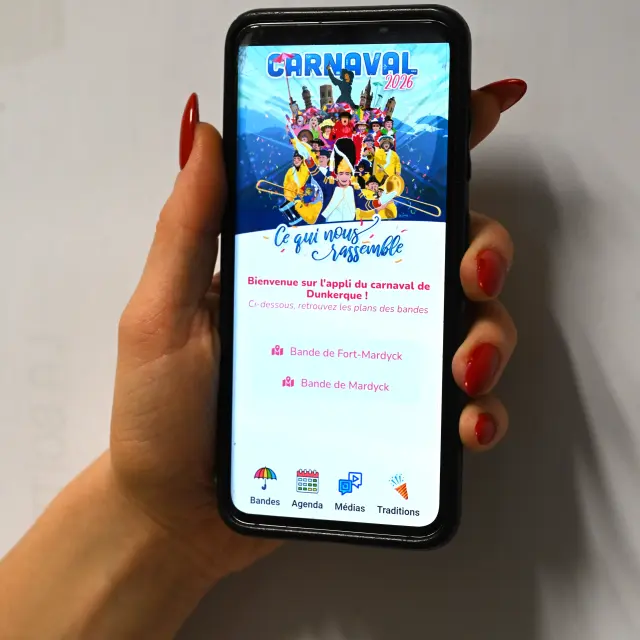
“Ben qu’est c’ça dit” – The Carnival App

Available via the “Corsaire” platform, this web app brings together everything you need to know about Carnival traditions and practical information:

  • Maps and practical information for the Carnival parades in Dunkirk and neighbouring towns,
  • The history of Carnival and how its traditions have evolved,
  • The Charter of the Children of Jean Bart,
  • Carnival songs and lyrics, along with a glossary of the “Dunkirk dialect”,
  • A calendar of Carnival-related events across the urban area,
  • Videos, podcasts and even a quiz to test your knowledge of Carnival!

The app is also available at: carnaval.ville-dunkerque.fr

Good to know

You’re almost ready to dive into the carnival! Just a few more practical tips, and it’ll be time to put on your clet’che (Carnival costume)…


The Seagull Cry Challenge

An unofficial event held on the morning of the Dunkirk parade, where carnival-goers of all ages and backgrounds try to imitate the cry of a seagull in a fun, quirky and friendly challenge. Every year, one man and one woman are crowned champion!

Feeling Peckish?

Plenty of options to choose from!

Food trucks, bars and restaurants will keep you fuelled up all along the parade route.

Enjoy chips from outdoor fry stalls, French onion soup in local cafés, and traditional dishes such as pot’je vleesch and Flemish beef stew in the brasseries…

Getting Around

On Carnival days, leave your car at home. Traffic and parking are prohibited along the parade route. And that’s just as well, as you may well fancy a refreshing glass of local beer!

Buses are free here… and not just during Carnival! You’ll find route maps and timetables at www.dkbus.com.

Glossary

Speak Dunkirk!

  • Bande : not a group of carnival-goers, but the parade itself. To “do the bande” means to take part in the carnival parade.
  • Beurt’che : a little dance with a girl and, by extension, a little dance within the parade.
  • Bucke : belly.
  • Chapelle : a legendary part of the carnival, with nothing religious about it! These are private homes or gatherings where carnival-goers are invited to enjoy some food and spend a little time together.
  • Clet’che : a carnival-goer’s costume.
  • Figueman : a character in the parade who takes part in the art of “intrigue”.
  • Intrigue : some carnival-goers disguise themselves until they are unrecognisable, teasing spectators by disguising their voices.
  • Masquelour : a carnival-goer taking part in the bande.
  • Reuze Papa : in the traditions of northern France, the giant representing the town. In Dunkirk, he is a Scandinavian warrior riding on a horse-drawn float, accompanied by his six guards, his children and his wife, Reuzine. They appear at the Dunkirk and Malo parades.
  • Rigodon : the grand finale of the parade, when the chahuts continue for an hour. The masquelours dance in circles, singing around the musicians on a bandstand. The rigodon ends with the Cantate à Jean Bart, preceded by a tribute to Co-Pinard.
  • Wiche : the local word for the male sexual organ. Often bawdy, carnival songs include the line “Come and play with my wiche, just five minutes, it won’t take long, and my wiche will be happy”.
  • Zôt’che : a kiss exchanged between carnival-goers. The carnival zôt’che is a kiss on the lips, shared in a friendly spirit and for practical reasons: it has the advantage of not ruining your make-up.

Eat Like a Dunkirk Local!

  • Beultekaze : head cheese, a traditional meat terrine.
  • Pot’je Vleesch : a traditional Dunkirk dish made with four white meats (chicken, pork, rabbit and veal), cooked with carrots and herbs. Served cold in its own jelly, with chips.
  • Smout : lard. It is spread on bread and seasoned with salt and pepper.
  • Podingue : a bread pudding made with milk, eggs and raisins, flavoured with rum.
  • Cululutte : a semolina brioche cooked wrapped in a cloth and served with a warm rum sauce (a speciality of Grand-Fort-Philippe).