Frac Martin Argyroglo
©

Frac Martin Argyroglo

Architecture

Architecture

Have you ever wondered how history shapes the character of a city? Our architecture has a thousand and one stories to tell. From Belle Époque villas to post-war Reconstruction buildings, there’s something to discover around every corner.

Take a closer look at buildings steeped in history, unusual and just a little bit eccentric.

Belle Époque Villas

What better way to discover our heritage than to stroll along the seafront, with your eyes drawn to the coastal villas of Malo-les-Bains?

With their façades adorned with countless details, these elegant homes tell stories of seaside escapes, from a time when artists and intellectuals sought beauty and relaxation away from the hustle and bustle of the city.

Keep your eyes peeled! The façades of the villas are dotted with unusual details and motifs that inspired the design of our beach huts.

Frac Grand Large

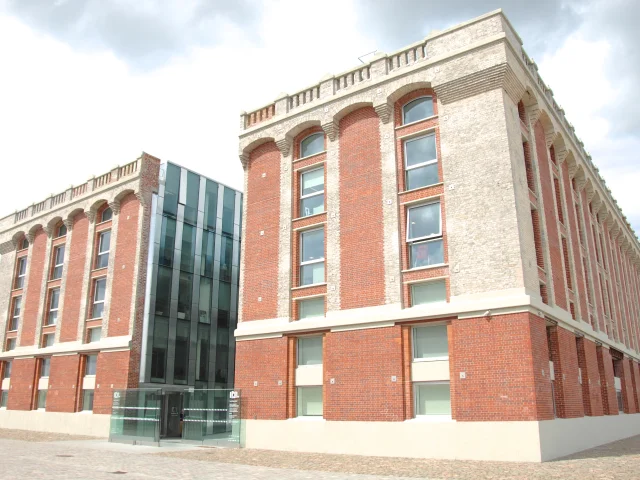
The building housing the FRAC Grand Large — Hauts-de-France was designed by architects Lacaton & Vassal on the site of the former Ateliers et Chantiers de France shipyards.

The architects chose to preserve a key element of the area’s history and identity by leaving the AP2 Hall – Prefabrication Workshop No. 2, where some of the largest ships were built, completely untouched. Instead, they created a twin structure of identical dimensions alongside the original 1949 building.

The FRAC Grand Large — Hauts-de-France has received numerous architectural awards, including the International Architecture Grand Prix in 2017 and the Hauts-de-France Regional Architecture Grand Prix in 2018.

Halle aux sucres

Housed in a former port warehouse, the Halle aux Sucres is a lively cultural venue dedicated to sustainable cities.

Its engaging exhibitions and programme of events explore topical issues and invite visitors to reflect on how our daily lives are changing and on today’s environmental challenges.

Excentric District

In the 1930s, an entire neighbourhood in Rosendaël fell under the influence of François Reynaert, a renowned artist who turned his hand to architecture, transforming each villa into a work of art.

Inspired by the work of modernist architects, and without any formal architectural training, he built his first house on Rue Carnot, in the heart of the neighbourhood where he grew up, in 1927. With his career taking off, he acquired a market-garden plot of land and went on to build 35 villas over the following twelve years.

Post-war Reconstruction

At the end of the Second World War, Dunkirk was one of the most heavily damaged cities in France.

Of the city’s 3,362 buildings, 1,524 were completely destroyed, 805 were severely damaged, and only 1,032 were considered habitable. Architects worked until the 1960s to rebuild the port and the city of Jean Bart, carefully balancing competing demands, urgent needs, Flemish influences and the modern principles set out in Le Corbusier’s Athens Charter.